Long-term Investing: Why Time Is on Your Side
Discover how regular contributions could outperform one-off deposits over time, as we explore the power of time and habit in long-term investing.
Some people start investing with good intentions, hoping that by making one-off or regular deposits into an Investment Plan could make them a profit.
Everything moves along swimmingly, until the markets go down... and then reality hits!
This is when the battle between your head and heart might begin to surface. But why do some people react negatively when markets drop and others seem relaxed about it?
Investing monthly vs lump sum: a closer look
In reality, when the markets go down, you don’t lose money until you make the decision to sell — which is when the losses become real. Here’s why:
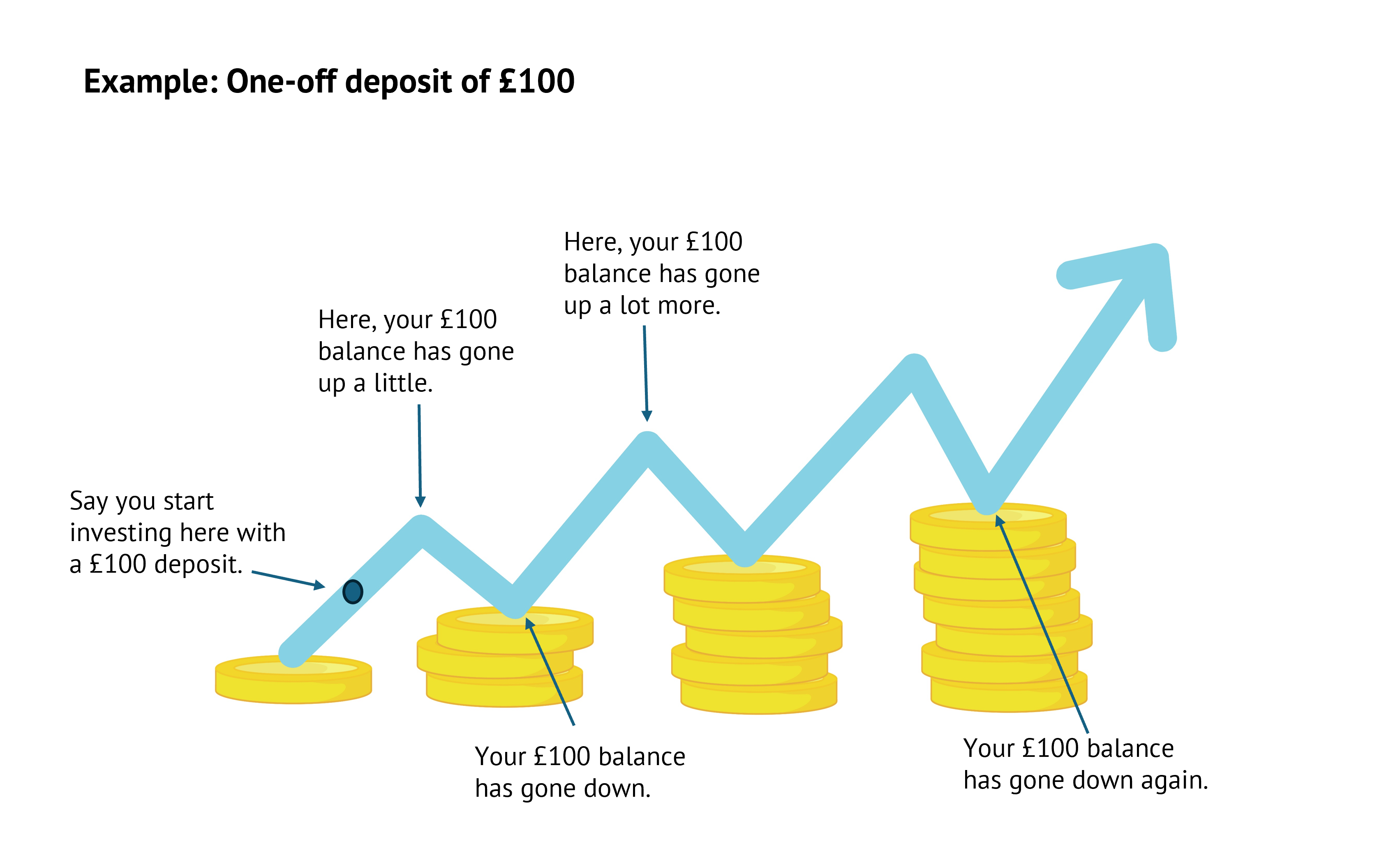
Information provided does not show actual performance and is not intended to show potential future investment growth.
With this example, it’s up to you when you withdraw your money: you could withdraw it and make £50 or withdraw it and lose £50. Hindsight, however, is not something we can use when making financial decisions; it’s all down to you and how much time you have to invest, as well as the level of risk you’re prepared to take.
Now, let’s look at someone who invests £100 every month by Direct Debit: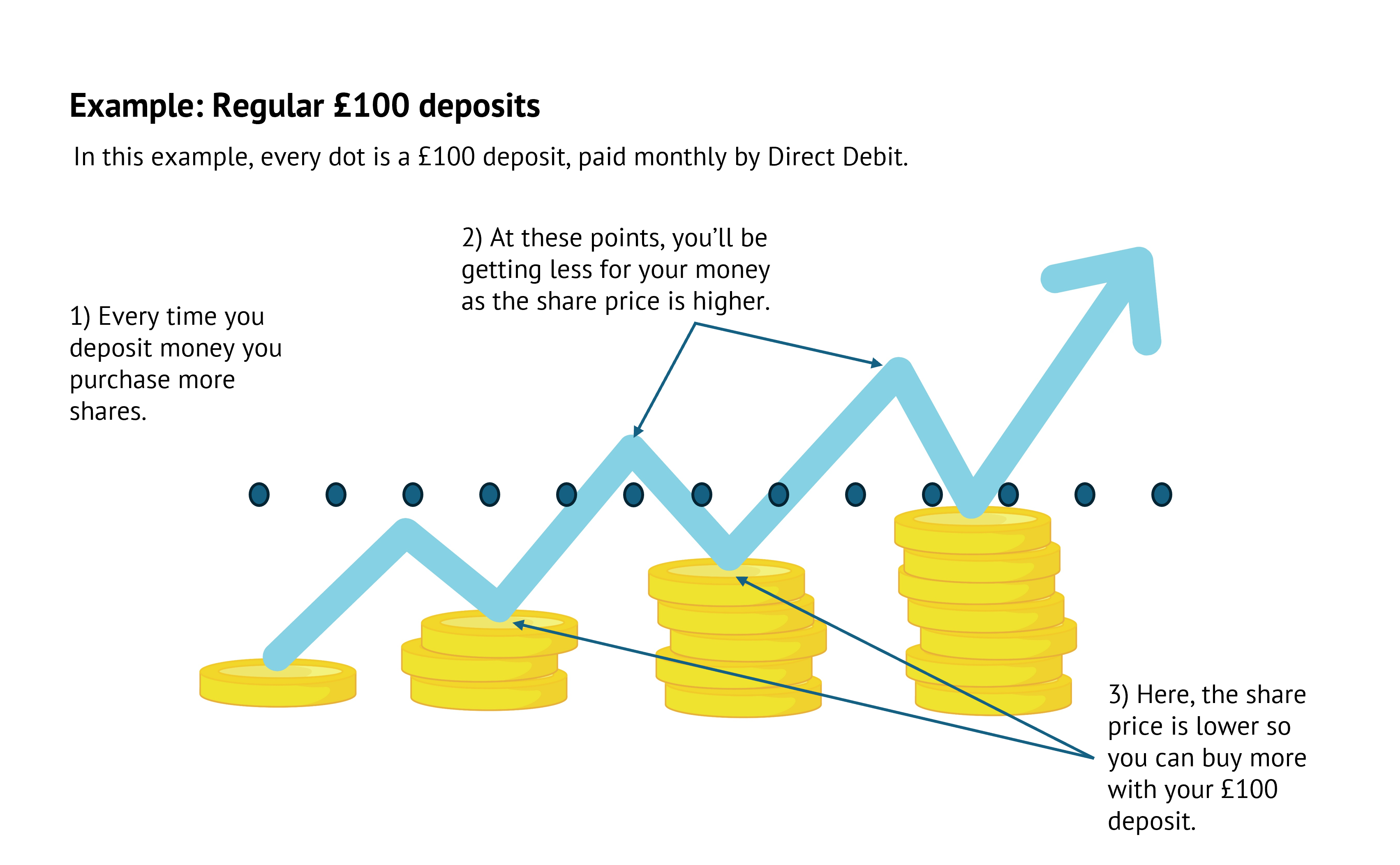
Information provided does not show actual performance and is not intended to show potential future investment growth.
Your £100 deposit could either make or lose money depending on when you invest it. Over time, the cost of the shares you purchase will even out — something we call pound cost averaging.
Pound cost averaging happens over time
Sometimes it can take years. So, if you want to (or need to) withdraw money from your Investment Plan when the markets are performing lower than when you initially invested, you’re going to get less back.
If you don’t need your money right now, you could simply wait and let the stock market do its thing. Investing over time gives your money the potential to grow. However, we cannot rely on past performance to predict future results, which is why we’ll always highlight ‘Your Capital is at Risk’ before you invest any money.
When you see the value of your Plan going down and you begin to panic, you should probably start to think about the following:
- What are you investing for?
- When do you realistically need access to your funds?
- How much risk are you willing to take?
- Should you be investing or saving?
For example, if you’re investing but need to withdraw money from your Plan to make an emergency purchase, then a Savings Account may be something to consider.
You may also want to consider other saving options (especially in the short term) if you don’t want to see your investments fluctuate.
Wealthify does not offer and cannot provide advice. So, if you need help with your finances, please speak to an independent financial advisor.
It’s important to remember that the examples above are just that – examples – with very simplified graphs to illustrate the effect of investing in one lump sum or with monthly deposits.
We invest with a long-term approach
Our aim as an investment company is to make sure you’re fully informed about how we work, what we do with your money, and to provide you with as much investing education as possible in the process.
Our investing experts are continually purchasing shares with every new deposit we receive from all customers, considering many varying factors when selecting investments. Your Plan value may reduce, but instead of selling those shares that have gone down, we might make the decision to purchase more, because they could have a better outlook over the long term.
And it’s this long-term approach that could help you unlock the key to successful investing.
Find our more about our Stocks and Shares ISA
Your tax treatment will depend on your individual circumstances, and it may be subject to change in the future.
With investing, your capital is at risk, so the value of your investments can go down as well as up, which means you could get back less than you initially invested.
Wealthify does not provide advice. If you’re not sure whether investing is right for you, please speak to a financial adviser.
About the authors

Caragh Medlicott
Content Writer
Caragh Medlicott
Content Writer
Caragh makes the world of investing easier to understand for our customers, with clear, jargon-free copy and the occasional well-placed pun. With a First-Class degree in English Literature, MA in Creative Writing, and a book to her name, Caragh brings a love of language and storytelling to everything she writes at Wealthify.
Useful articles

UK Autumn Budget 2026: Need-to-knows
11/11/2026 • Read time 4 min

Month in the Markets: October 2026
10/11/2026 • Read time 2 min

How to stay calm during market falls
06/11/2026 • Read time 7 min

What are bonds, and why is everyone talking about them?
12/10/2026 • Read time 4 min

Investing in AI: Is It Still Worth It?
Updated 12/10/2026 • Read time 7 min

Month in the Markets: September 2026
09/10/2026 • Read time 5 min